

COLORFRONT
Colour Mediapro – Uruguay
Colour is an integral audiovisual post-production boutique founded in 2014 in Montevideo, Uruguay. Since then, we have built a solid trajectory in film projects, series, TV, and advertising, working with the most demanding production companies and distribution platforms worldwide. Since 2024, we have been part of Group Mediapro, which boosts our infrastructure and consolidates our regional reach. We operate from Reducto Audiovisual Hub in Montevideo and our offices in Buenos Aires, Argentina, functioning as a regional services hub for the creative industries.
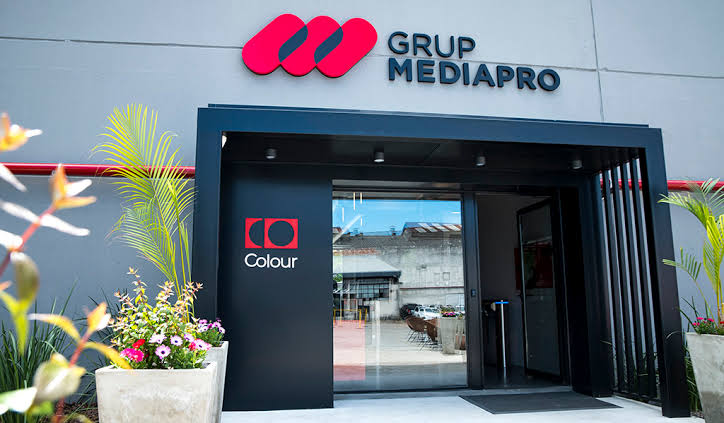
Colour Studio – Reducto, Montevideo, Uruguay.
What defines us is not only the technology we operate but how we approach each project. We adapt workflows to the specific needs of each title, combining a highly experienced team with cutting edge tools. This allows us to tackle any technical or creative challenge with the same rigor: from an auteur feature film to a multi-season series for global platforms. Our facilities are designed to manage and deliver content in all formats, resolutions, and platforms that the current market demands.
We have been working for streaming platforms since 2018, and we grew alongside the evolution of audiovisual distribution systems. This accumulated experience allowed us to build relationships of trust not only with the production companies and filmmakers we collaborate with but also with the platforms themselves and the companies that develop the core tools of the sector, such as Colorfront.
Our conception of mastering stems from a conviction: it is simultaneously the last creative stage of the project and the first stage of its distribution. It is the moment when all the work done since filming must become a technically solid, reproducible, and adaptable product without losing the original creative intent.
In every project, this chain begins with the Production Master—HDR or SDR depending on the project—and from it, we generate all the deliverables each client needs: IMF packages, DCP, Texted, Non-Subtitled, and Textless versions, split-track masters, reference screeners with and without subtitles. A universe of deliverables that varies according to the platform and the needs of each title, and which we handle with the same level of demanding standards in all cases.
Mastering for Amazon involves demanding technical specifications (IMF, HDR, Dolby Vision, HDR10, audio, subtitles, QC). What were your main challenges in meeting those standards before using Transkoder?
Before incorporating Transkoder, we operated with a constellation of different tools for each type of delivery. This generated intermediate steps that fragmented the flow: each tool change was a point of friction, a moment where continuity could break and the margin for human error expanded. Managing HDR and SDR versions, IMF and DCP packages, and QC processes in parallel multiplied manual procedures and working hours disproportionately.
The challenge was especially complex in projects with Dolby Vision, Texted, Non-Subtitled, and Textless versions, where all deliverables had to maintain exact frame-by-frame correspondence and visual coherence across different formats, platforms, and playback environments. Added to this was the need to guarantee complete traceability against the QC processes of each platform. It was clear that we needed a tool that would unify these processes and allow us to operate at the level our projects—and our clients—required.
Why did you choose Colorfront’s Transkoder as your mastering tool? What specific capabilities were decisive compared to other solutions?
We chose Transkoder because it brings together in a single platform what previously required several different stages and tools: master generation, IMF packaging, DCP and KDM/DKDM creation, verification, and QC. This allows us to work in an integrated way with the HDR and Dolby Vision workflows that our projects demand, with a level of control that was not possible to maintain before.
The decisive capabilities were the integration of the Colorfront Engine and its color science, render speed, flexibility to respond to the specifications of different platforms, the robustness of the IMF generator, and specific QC tools. This combination turned Transkoder into the core of our mastering system: not just as a packaging tool, but as the center of a complete pipeline.
The relationship we built with the Colorfront team was as important as the technology. We found counterparts willing to understand the specificities of our projects, respond to concrete production needs, and develop solutions with us. This proximity allowed us to integrate Transkoder not only in the mastering stage but in the complete flow design: from color to final delivery. Working with a partner who thinks through the pipeline with you—and doesn’t just deliver software—makes a concrete difference in the quality of the result and the speed with which the team grows.
It should be noted that the tool is nothing without a supporting technical and artistic team. At ColoUr, the role of Mastering Head, led by Carmela Marichal, is a fundamental piece of all the integration, optimization, and constant good vibes in such a crucial stage of the process.
Describe a specific title or project mastered for Amazon with Transkoder. What was its complexity (resolution, HDR, number of versions, languages, IMF deliverables) and what were the deadlines you worked under?
A particularly representative case is Belén. The project used Colorfront Engine from the very beginning: design of looks for shooting, processing of On-Set Dailies on Amazon’s virtual machines, color correction, and final mastering with Transkoder. The delivery comprised a UHD HDR Production Master in Rec.2020/PQ at 1000 nits, its UHD SDR version in Rec.709/BT.1886, Dolby Vision, DCP, and Texted, Non-Subtitled, and Textless versions, in addition to English and FN (Forced Narrative) subtitles. The entire project was developed over two months; the mastering and QC stage was resolved in fifteen days.
The most significant aspect was not the deadline but the continuity of the workflow. By using Colorfront Engine throughout the entire project, we reached mastering with a solid and coherent image, ready to adapt to the different deliverables without needing to reconstruct the color decisions at each stage. This is only possible when the same engine accompanies the project from the first day of shooting until the final delivery.

“Belen, Movie Amazon Prime video”
This experience had direct continuity in Barreda, where we worked together with Amazon and Colorfront on a pilot project to test a new mastering scheme based on IMF. The delivery included IMF Dolby Vision HDR and SDR, plus complementary IMF packages for the Texted, Non-Subtitled, and Textless versions.
Being part of that pilot was not accidental: it was the result of the accumulated trust with Amazon and the technical level we consistently demonstrated.
Subsequently, in Porno y Helado S3, we extended this learning to a pipeline carried out entirely on Amazon’s virtual machines: from On-Set Dailies, conforming, and color to mastering, executed with two virtual instances of Transkoder. This project demonstrated that we are capable of operating at platform scale, in completely virtual environments, and with the demands of an active production series.
These three projects are part of a broader experience that includes series like Barras S2, Catedrales, and Amor Animal. Viewed together, they describe a natural evolution: we started using Transkoder as the central mastering tool, and today we operate it as the core of an ecosystem that connects shooting, Digital Lab, color, QC, and delivery in a continuous flow.
How did Transkoder perform in handling HDR and Dolby Vision, the generation of packages IMF and the compliance with the delivery specifications of Amazon? Did it reduce the number of rejections or corrections in QC?
The most important change that Transkoder brought was not just technical: it was conceptual. QC ceased to be an instance subsequent to the creation of the master and became part of its construction. Today, we can detect, analyze, and resolve most problems before the first submission, which allows us to reach platform QC with a security and predictability that we did not have before.
In concrete terms: Transkoder allows us to maintain visual coherence and technical consistency between the HDR and SDR versions of the same master, and to comply with the specifications of each platform—color space, bit depth, EOTF, and loudness—without additional manual steps between tools. IMF packages are generated with the exact structure and metadata required for each delivery. The integrated verification tools for DCP, Dolby Vision, and IMF, along with framing, luminance, gamut, and loudness analysis, allowed us to significantly reduce rejections due to technical problems. On average, the first submission of the Production Master requires only a single round of QC. Corrections on secondary deliveries have virtually disappeared. And when we detect parameters outside tolerance, we correct them directly from Transkoder, without leaving the flow or losing traceability.

“Barrabravas” Amazon Prime Video
Facts: what impact did it have on render and mastering times, in processing capacity, in number of deliverables simultaneous or in operating costs? How much was the delivery cycle accelerated?
The clearest number: the combined time for rendering and material transfer was reduced by approximately 80% compared to the previous workflow. Furthermore, we can chain secondary deliveries by optimizing system usage and total processing time, which multiplies effective capacity without requiring more infrastructure.
But the number doesn’t tell the whole story. The reduction in time for renders and intermediates translated into something more valuable: more team hours dedicated to verifying quality and coherence, instead of managing transfers and resolving repetitive problems. This allowed us to elevate the level of control over each delivery without the growth in the volume of deliverables implying a proportional multiplication of manual work. Producing more, better, and with greater predictability: that is the real impact of Transkoder on our operation.
How did Transkoder influence the final quality of the master and the reliability of deliveries? Has it strengthened your relationship or reputation as a certified provider for streaming platforms?
The consistency provided by Transkoder—by using the same color and packaging engine for all versions—reduces variables between deliverables and makes results more predictable in platform QC. Working with industry-recognized infrastructure facilitates technical dialogue and places us within the standard of quality that these projects demand.
Beyond the technical standard, Transkoder expanded and consolidated our role within the projects. We positioned ourselves not as providers of a final stage, but as technical partners capable of thinking through the complete image journey—from shooting to distribution—anticipating the needs of each delivery and proposing solutions before problems arise. That is the difference between a supplier and a partner, and it is exactly what platforms and production companies value when they choose to work with us.
The trust we built with Amazon translates into concrete facts: we were part of the pilot for a new IMF-based mastering scheme, within the framework of a direct collaboration with Amazon and Colorfront. This type of collaboration is not achieved because of the software used—it is achieved through the solidity and consistency with which we operate over time. 8. How flexible did Transkoder prove to be in adapting to different formats, codecs, and changing platform requirements, beyond Amazon?
Transkoder allows us to work under the specifications of Amazon, Netflix, Disney, and HBO without needing a different tool for each client. We also use it to generate DCP and KDM/DKDM intended for cinematic distribution.
A single system that covers the universe of our projects. In an industry where specifications are constantly evolving, flexibility is not just about accepting many formats—that’s a starting point, not a differentiator. The real value lies in being able to incorporate a new requirement without redesigning the pipeline, in adapting to a change in specifications without losing workflow traceability. Transkoder gives us that stable foundation, and on it, we build each delivery with the certainty that the system will not be the bottleneck.
If you had to summarize the value of Transkoder for your operation in one sentence, what would it be?
Transkoder allows us to connect creative intent with final delivery: the image we design from the shoot is the same one that reaches the platform, no matter how many versions the project needs.
What would you recommend to another post-production house that is evaluating Transkoder to enter the mastering business for large platforms?
The first thing we recommend is to change the question: it is not about adopting software, but about designing a pipeline. Transkoder is not a tool that is added to what already exists—it is the central piece around which a methodology is built: controlled presets, traceability, progressive automation, integrated QC into the flow, and a team that understands the complete process, not just the tool.
Its real potential appears when working with that logic. The learning curve exists, as in any professional system of this level, but once the team understands the flow, the operation becomes natural, and the possibilities expand concretely.
What is most underestimated when evaluating the tool is what comes after the first project: the accumulation of knowledge, the refinement of presets, the ability to anticipate what each platform will require before they even ask for it.
That is not provided by the software alone—it is provided by the software plus the team that operates it with judgment and experience. When that combination works, the leap in quality, speed, and reliability is substantial and sustainable over time.
The support of NMF
NMF, Colorfront’s global distributor, supports Colour’s operation on Transkoder and participated directly in the construction of several of the workflows described. The support was not limited to implementation: it translated into sustained technical dialogue during the pipeline design, when each platform specification required an architectural decision. “We found counterparts willing to understand the specificities of our projects, respond to concrete production needs, and develop solutions with us,” Nocella points out.
“That proximity allowed us to integrate Transkoder not only in the mastering stage but in the complete flow design: from color to final delivery.”
“Working with a partner who thinks through the pipeline with you—and doesn’t just deliver software—makes a concrete difference in the quality of the result and the speed with which the team grows.”
This support was measured in internal adoption: the system was incorporated as a methodology—controlled presets, traceability, progressive automation, and integrated QC into the flow—not as an added tool. “The learning curve exists, as in any professional system of this level, but once the team understands the flow, the operation becomes natural, and the possibilities expand concretely”, notes the CEO. On Colour’s side, the counterpart has names: Carmela Marichal, Daff Schneydher, Sebastián Rodriguez, and on Colorfront and NMF’s side, the support team is always ready to assist in any part of the process.
Press Contact
Colour
German Nocella – gnocellasedes@mediapro.tv
NMF
Camila Montefiore – camila@nachomf.com
José Tamez – jose@nachomf.com