

100 Years of Solitude: Three Countries, One Reference Image
On 100 Years of Solitude, FilmFlow supplied the Colorfront infrastructure that held a post-production pipeline together across Colombia, Mexico and Spain.
The editorial team was split between Colombia, Mexico and Spain. Members of the direction team and the showrunners worked from Bogotá, Medellín and Mexico City. Colour grading and VFX involved talent and facilities distributed across Colombia and Mexico. On a production of that scale and cultural weight, the question is not whether remote review is possible — it is whether the image everyone is looking at can be trusted enough make decisions on.
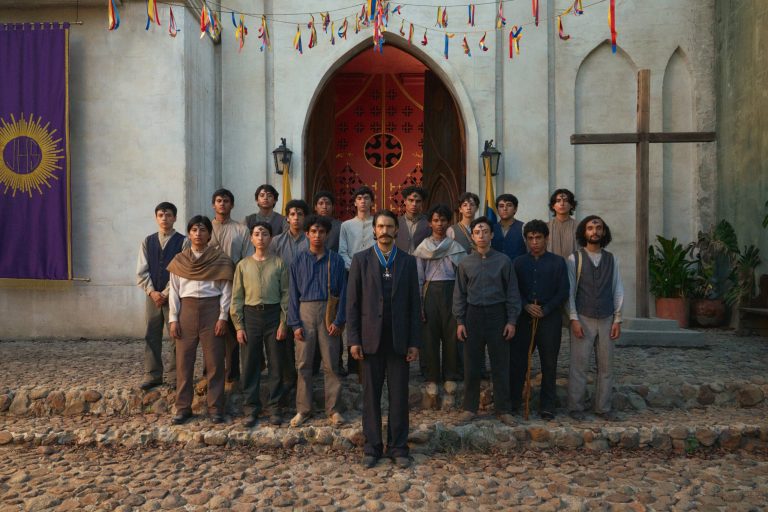
That is the problem FilmFlow was brought in to solve on 100 Years of Solitude. The company provided set and laboratory services on the production and subsequently supplied the technology infrastructure supporting certain editorial and remote review processes during post. Colorfront Streaming Server, deployed and supported in the region by NMF, Colorfront’s global distributor, was a key component of that infrastructure.
Infrastructure, not a video call
The distinction matters, and FilmFlow is precise about it. The company was neither the post house nor responsible for colour grading or VFX on the project. It participated as the infrastructure provider enabling part of the remote collaboration flow — the layer that allowed specialized vendors, editorial teams and creative leadership in different countries to work against the same picture.
Through that infrastructure, real-time editorial reviews and remote sessions tied to the colour and VFX processes connected the creative and technical teams regardless of location, with every participant reviewing the same material simultaneously at a high level of precision and image consistency. The colour and VFX reviews were where the requirement became absolute. A conventional videoconferencing or video streaming tool does not necessarily offer the accuracy needed to evaluate an image and make certain creative decisions on it. What FilmFlow had to deliver was not a transmission — it was a reference.
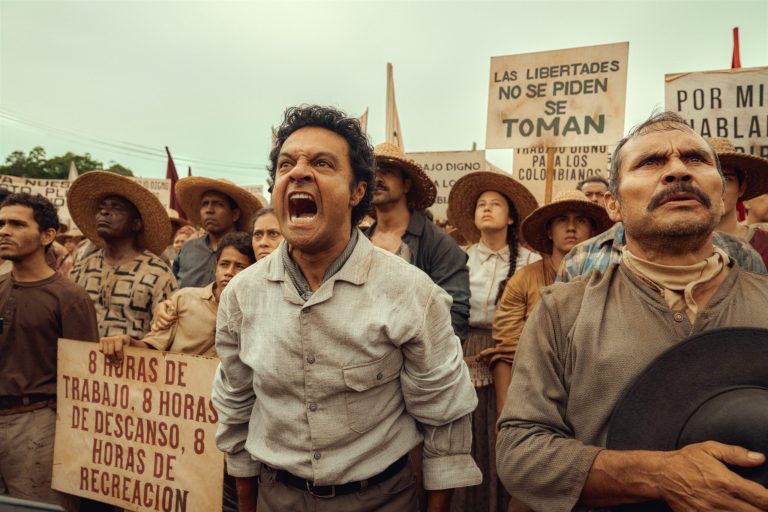
“There are plenty of tools for transmitting video remotely. After evaluating the alternatives, Colorfront gave us one fundamental advantage: image fidelity and consistency. It is not about transmitting video — it is about giving participants a reference precise enough to make creative decisions with confidence.”
Fernando Parra, CEO, FilmFlow
The conclusion FilmFlow draws from the project reframes what the tool is for. Streaming Server can go well beyond replacing physical presence in a review room: it can become an integral part of a hybrid post-production pipeline, connecting talent, facilities and specialised vendors across cities and countries without geographic distance constraining creative review. On Cien Años de Soledad it did not compensate for a distributed team. It made the distributed model workable.
The operation behind the infrastructure
FilmFlow runs roughly fifteen productions a year in each of its two core markets, Mexico and Colombia. This year it opened operations in Argentina with at least two annual projects, and it is currently evaluating Brazil. Most of that work is television and streaming series, alongside four to five feature films a year, for clients delivering to Netflix, Prime Video, Max and ViX. The service range runs from DIT and On-Set Dailies through data management and digital laboratories.
Being trusted with the infrastructure layer of a project like 100 Years of Solitude is a consequence of how the rest of that operation was built. Before adopting Colorfront, dailies processing ran principally on DaVinci Resolve — powerful as a colour tool, limited as a dailies platform at scale. The decisive gap was the absence of automated reporting and preconfigured templates for different cameras and workflows, which meant more manual intervention, longer setup and a wider opening for operational error. On-Set Dailies demands more robust hardware, but makes considerably better use of it, particularly when processing and generating multiple deliverables simultaneously.
The decision to adopt it was strategic rather than reactive. FilmFlow wanted to differentiate itself from local competitors with a platform built for high-end workflows at a moment when very few companies in Latin America were running it, which positioned it among the first providers in the region with the capability. The requests followed, from studios, platforms and production companies already familiar with Colorfront and looking for suppliers able to integrate into their workflows.
Volume as proof
The clearest stress test has been a series of productions for Telemundo. Shot on Sony VENICE 2 with three shooting units operating simultaneously, each carrying three main cameras, the projects also absorbed material from GoPro, DJI drones and, in some sequences, drones equipped with RED KOMODO. Under those conditions FilmFlow has processed up to sixteen hours of material per day while generating every required deliverable inside very tight windows.
Two sets of dailies are produced simultaneously as standard practice: an Executive Dailies version for producers, directors and clients, and an editorial proxy version, each with its own resolution, codec, burn-in and watermark configuration. On-Set Dailies generates all of them in a single pass, applying the correct settings automatically, with no need to build multiple render queues or reprocess the same material. On Netflix productions shot with ARRI Alexa 35, the emphasis shifts from volume to continuity: a fully ACES-based colour pipeline from set through post, with creative decisions and metadata travelling consistently across the entire process.
Carrying the look across borders and tools
Implementing the colour pipeline involved a genuine learning curve. Understanding the Colorfront Engine and its colour management inside an ACES workflow took time, testing and the standardisation of internal processes. Past that stage, FilmFlow now runs Colorfront fully interoperably with the main post tools its clients use, including DaVinci Resolve and Baselight. On most productions the creative look is designed in Baselight or Resolve, while on set the team works with Pomfort Livegrade and Silverstack for colour and metadata management. On-Set Dailies acts as the bridge between the two worlds, and support for ACES, LUTs, CDLs and AMF carries colour and metadata reliably from set to final conform. The image reviewed during the shoot is the image that reaches colour, conform and final master — which is precisely what makes a distributed review model like the one on Cien Años de Soledad defensible in the first place.
The measurable side
Dailies delivery times fell by approximately 30%, driven by processing automation, simultaneous generation of multiple deliverables and the elimination of repetitive manual tasks. Capacity to serve productions with multiple simultaneous shooting units rose by roughly 50%, without compromising delivery times or deliverable quality. The third gain resists a percentage: standardised templates for project types, cameras, delivery formats and burn-in configurations automated what previously depended on manual setup in every production, reducing human error to a minimum. The same standardisation governs access, since Executive Dailies and editorial proxies carry their own watermarking, burn-in and permission settings, so each team receives only the version intended for it. For clients such as Netflix, where technical compliance is especially rigorous, repeatable and traceable results are what make strict delivery standards routine.
The distributor’s role
Colorfront’s technology reached the region through NMF, its global distributor, and the relationship has been operational rather than transactional. NMF provided the training that carried FilmFlow’s team through the ACES and Colorfront Engine learning curve, ongoing technical support across the company’s markets, and direct participation in workflow design — the part that determines whether a platform becomes a pipeline or stays a tool. That distinction is what a project like Cien Años de Soledad exposes: supplying infrastructure to a distributed post-production is a workflow design problem before it is an equipment problem. For a company standardising operations across Mexico, Colombia and Argentina, a partner that designs the workflow alongside the team is what makes the same standard reproducible in every market.
Operating as a regional network
FilmFlow intends to consolidate Colorfront as one of the core technologies of its high-end workflows as it grows across Latin America, so its teams operate under the same standards regardless of which country a production sits in — Pomfort Livegrade and Silverstack on set, Colorfront On-Set Dailies in the labs, interoperability with Baselight and DaVinci Resolve in post, with ACES and AMF carrying continuity between tools, vendors and phases.
Expanding the Streaming Server infrastructure is the other half of the plan, and the experience on Cien Años de Soledad is what makes the case. As productions become increasingly international, connecting colour suites, editorial teams, VFX, direction, cinematography, showrunners and producers regardless of location becomes a service in its own right. Regional growth, FilmFlow concludes, does not depend solely on owning physical infrastructure in every market, but on the capacity to interconnect it and operate as one regional network under a single quality standard.
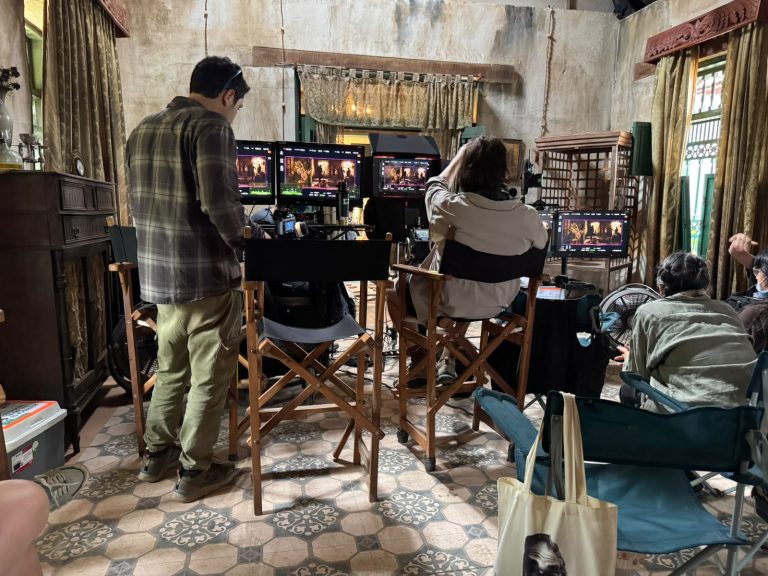
Set “100 Años de soledad”
“Today anyone can generate dailies with a free tool. The real difference is the ability to scale, standardise processes and serve multiple productions simultaneously without compromising quality. Colorfront is not designed only to make dailies — it is designed to run high-end productions. When a company reaches that level of operational maturity, the investment justifies itself.”
Fernando Parra, CEO, FilmFlow
About the parties
FilmFlow provides DIT, On-Set Dailies, data management and digital laboratory services for feature film, television and streaming productions, operating in Mexico, Colombia and Argentina.
Colorfront Streaming Server and Colorfront On-Set Dailies are the industry-standard systems for colour-accurate remote review, dailies processing, ACES and AMF colour management and multi-deliverable generation, built on the Colorfront Engine.
NMF is the global distributor of Colorfront, providing training, technical support and workflow design for facilities building complete production and post-production pipelines.
Press Contact
FilmFlow
Fernando Parra – fp****@********tv.com
NMF
Camila Montefiore – ca****@*****mf.com
José Tamez – jo**@*****mf.com